
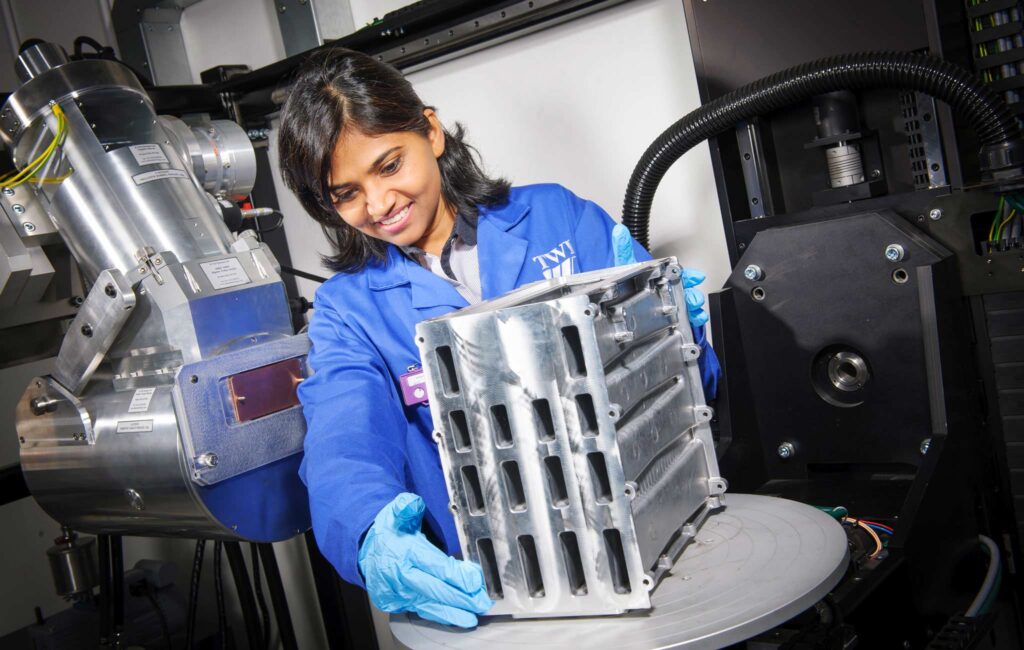
IEMA’s radiographic inspection labs are equipped with cutting-edge technologies to offer radiographic testing for the Aerospace, Energy, and Power Generation industries. Our international specialists offer guidance on the most appropriate testing techniques to ensure the suitability of your materials and products.
Radiographic examination involves the use of an isotope or x-ray tube to produce an image. Volumetric inspection identifies flaws that are not visible on the surface and may be difficult to detect by other means.
Inspection Method
Radiographic inspection methods at IEMA encompass a comprehensive array of both conventional and advanced digital techniques:
- Conventional Radiography:
IEMA’s radiographic inspection personnel, certified to standards like ASNT Central Certification Program (ACCP), PCN (ISO 9712 compliant), EN 4179, and NAS 410, adeptly perform conventional film radiography. This portable method excels in revealing even the minutest cracks in metallic materials through metallurgical testing. - Close Proximity Radiography (CPR):
In addition to conventional and digital radiography, IEMA provides Close Proximity Radiography (CPR), also known as “Small Controlled Area Radiography” (SCAR). This unique industrial radiography process, developed to eliminate the need for personnel evacuations, can generate both film and digital imaging. - Computed Radiography (CR):
IEMA’s NDT laboratories proficiently conduct Computed Radiography, a digital method producing images viewable on laptops or computers. This eliminates the necessity for chemical processing and expensive film storage. - Digital Radiography (DR):
IEMA employs cutting-edge digital radiographic equipment featuring Digital Detector Arrays (DDA). This technology displays images directly on a computer screen, facilitating quick and easy sharing. It’s essential to grasp the distinction between Computed Radiography (CR) and Digital Radiography (DR).